Rainbow Coloring Pages (25 Free Printable PDF)
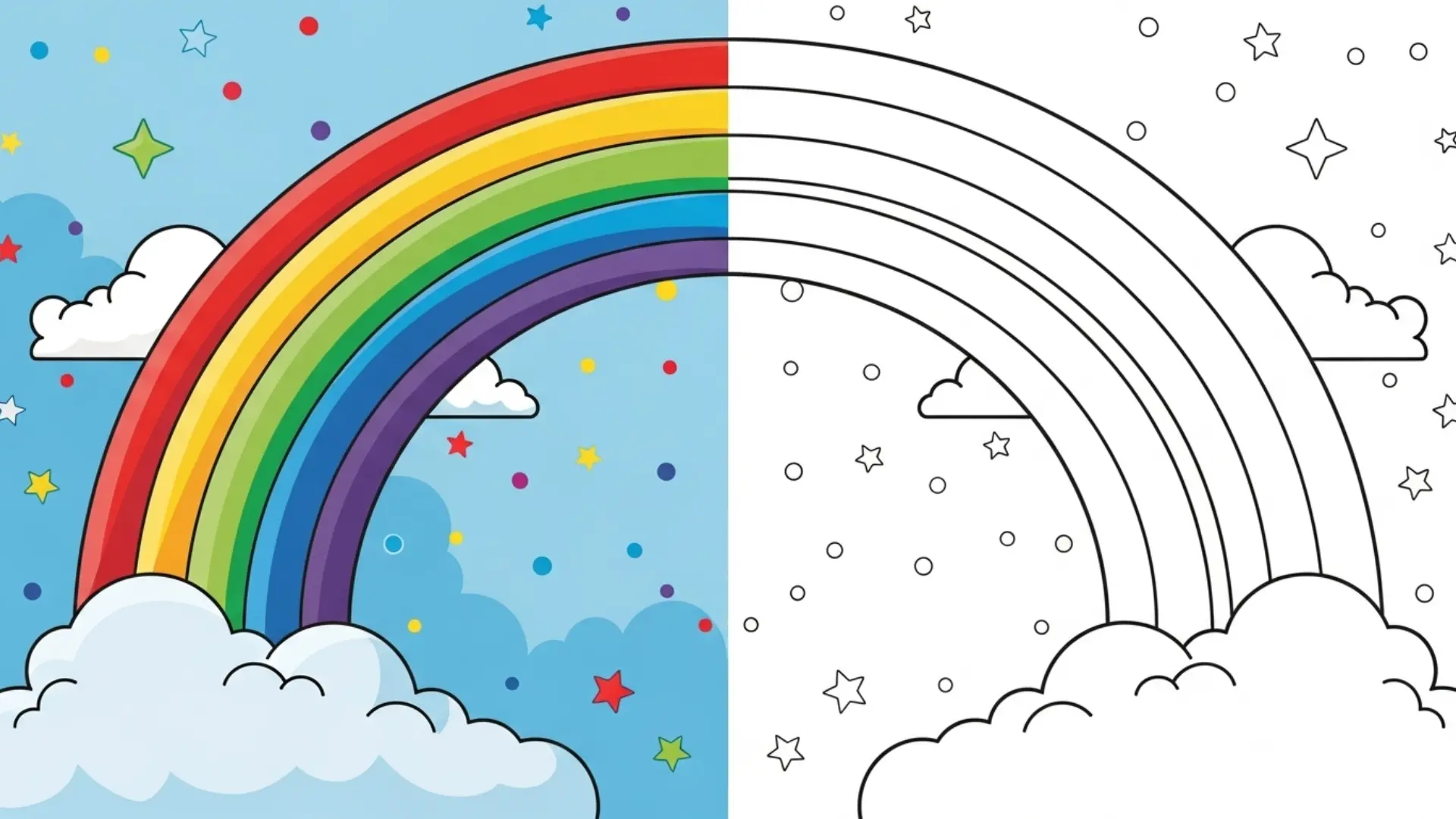
The rainbow has always been a symbol of joy and happiness for children and adults. When this beautiful strip of seven colors appears in the sky after the rain, the heart automatically fills with joy and peace. Rainbow coloring pages bring this magical scene closer to children so that they can further highlight its beauty while coloring on paper.
These pages are not only a creative activity but also teach children about color recognition and their correct combination. The seven colors of the rainbow red, orange, yellow, green, blue, purple and violet make the world of colors more interesting for children. Children learn these colors in order and try to recreate the natural beauty through their coloring.
What’s Included in Our Rainbow Coloring Pages Set
This set of rainbow coloring pages is not only a source of entertainment for children, but also a great way to develop color recognition, sequencing, and creative thinking. These pages include various designs and themes that are suitable for children of all ages. This set introduces children to the world of nature and imagination along with the rainbow.
1. Basic rainbow designs: Simple and clear rainbow sketches are included so that young children can easily color and learn the order of the seven colors.
2. Clouds and rain scenes: There are designs with clouds and raindrops along with the rainbow, which makes coloring more interesting and closer to reality.
3. Nature-related designs: Rainbow designs with trees, flowers, mountains and rivers are included so that children can bring the beautiful scenery of nature to life through their colors.
You May Also Like These Coloring Pages!
Free Printable Rainbow Coloring Pages

rainbow with big sun and clouds
Bright rainbow shining with sun and fluffy clouds, cheerful coloring page for kids.

beautiful rainbow coloring sheet for kids
Lovely rainbow scene, fun and easy coloring sheet designed especially for children.

cat sitting on cloud under rainbow
Cute cat relaxing on cloud beneath rainbow, charming and playful coloring page.

cat sitting on cloud under rainbow
Adorable cat enjoying rainbow view, fun and sweet coloring activity for children.

cute unicorn below a rainbow
Magical unicorn beneath colorful rainbow, delightful and fun fantasy coloring page for kids.

rainbow with heart-shaped clouds
Beautiful rainbow with heart-shaped clouds, creative and adorable coloring activity for children.

easy rainbow with flowers coloring page
Simple rainbow surrounded by flowers, easy and joyful coloring sheet for kids.

easy rainbow with smiling faces
Cheerful rainbow with happy smiling faces, fun and beginner-friendly coloring page.

full page rainbow with sun and cloud
Large rainbow covering page with sun and cloud, fun coloring activity for children.

large rainbow coloring page for kids
Big rainbow design, simple and engaging coloring page made for children.

magical rainbow coloring sheet
Sparkling magical rainbow design, fun and creative fantasy coloring sheet for kids.

peppa pig rainbow coloring page
Peppa Pig enjoying rainbow scene, adorable and fun coloring page for children.

peppa pig rainbow coloring sheet
Sweet Peppa Pig rainbow design, playful and cheerful coloring activity for little kids.

radiant rainbow coloring page
Shining radiant rainbow, creative and joyful coloring sheet for children and families.

realistic rainbow coloring page
Detailed realistic rainbow scene, fun and relaxing coloring activity for kids and adults.

simple rainbow coloring page for toddlers
Easy rainbow outline, beginner-friendly coloring sheet perfect for toddlers.

sparkling rainbow in cloudy sky
Bright rainbow sparkling in cloudy sky, magical and fun coloring page.

spongebob rainbow coloring page
Fun Spongebob rainbow design, cheerful and exciting coloring activity for kids.

stars on rainbow coloring sheet
Beautiful rainbow decorated with stars, playful and creative coloring page for children.

unicorn strolling on rainbow coloring
Magical unicorn walking on rainbow, enchanting and fun coloring sheet for kids.

rainbow with shooting star
Bright rainbow with shooting star, magical and joyful coloring page for children.

butterflies flying over rainbow
Pretty butterflies fluttering above rainbow, charming and fun coloring activity for kids.

rainbow with storm clouds and lightning
Rainbow shining through storm clouds and lightning, exciting coloring page for children.
Coloring Tips for Rainbow Coloring Pages
To make rainbow coloring pages interesting and beautiful, it is not enough to just fill in the colors, but a little creative thinking and the use of different techniques are also necessary. Children can learn the arrangement of colors, shading, and the use of backgrounds better through these pages. These tips will not only make the coloring experience enjoyable but will also strengthen children artistically.
1. Remember the correct order of colors: The seven colors of the rainbow (red, orange, yellow, green, blue, indigo, violet) always come in a certain order. Teach children to maintain this order so that the rainbow looks natural and original.
2. Use shading and blending: Instead of filling in just one color, blend light and dark shades. For example, add light and dark tones to blue to create more beauty and depth.
3. Focus on the background: To make the rainbow stand out more, add a blue sky, white clouds, or raindrops to the background. This will make the design look closer to reality and more attractive.
4. Try different coloring tools: Pencil colors are great for softness and shading, while markers help to fill in bright and prominent colors. Watercolors give the rainbow a softer and more natural look.
5. Give creative freedom: Rainbows don’t always have to be in natural colors. Children can use their favorite colors to create a “magical” or “imaginary rainbow” if they want. This promotes their creative thinking.
6. Add additional decorative elements: Add additional details such as stars, birds, flowers, or unicorns around the rainbow to make the picture more lively and interesting.
Creative Ways to Use Rainbow Coloring Pages
Rainbow coloring pages are not just a way for kids to color, but they are a great way to develop their creative thinking, learning ability, and fun activities. Parents and teachers can make coloring more interesting and rewarding for kids by using these pages in various ways. Here are some creative ways:
1. Incorporate into educational activities: Rainbow coloring pages are great for teaching kids about color order and scientific facts. Teachers can use these pages in the classroom to explain to kids how light and rain create a rainbow. To turn these creative sessions into a fully integrated science module covering meteorology and optical prisms, you can reference the classic weather breakdowns on the National Geographic Kids Weather Education Guide to teach children about atmospheric science while they color.
2. Celebrations and Party Decorations: After coloring these pages, kids can cut them out and use them as party decorations, such as adding a rainbow theme to a birthday party.
3. Craft and Home Decoration: After coloring is complete, the pages can be framed and hung on the wall of the room or used in cards and posters. This also appreciates the children’s work and adds beauty to the home decoration.
4. Sports and Educational Games: Rainbow pages can be turned into puzzles or matching games after coloring. Children become more skilled in sorting and recognizing different colors.
5. Creative Competitions: Teachers or parents can hold coloring competitions among children that include rainbow pages. This activity motivates children to color with more effort and enthusiasm.
6. Mood-boosting activity: Rainbow is a symbol of hope and happiness. When children color these pages, their mood is positively affected and they feel more excited and positive.